

December 11, 2025
Many patients use the term “under-eye bags” to describe any puffiness around the eyes—but not all puffiness is the same. In fact, malar bags vs under-eye bags affect different areas of the face and often require different treatment strategies.
Understanding the difference is important, especially if you’ve tried treatments before and didn’t get the result you expected. At Balbas Antiaging in Hollywood, FL, we take a consultative approach to identify what’s really causing the fullness and build a plan that fits your anatomy.
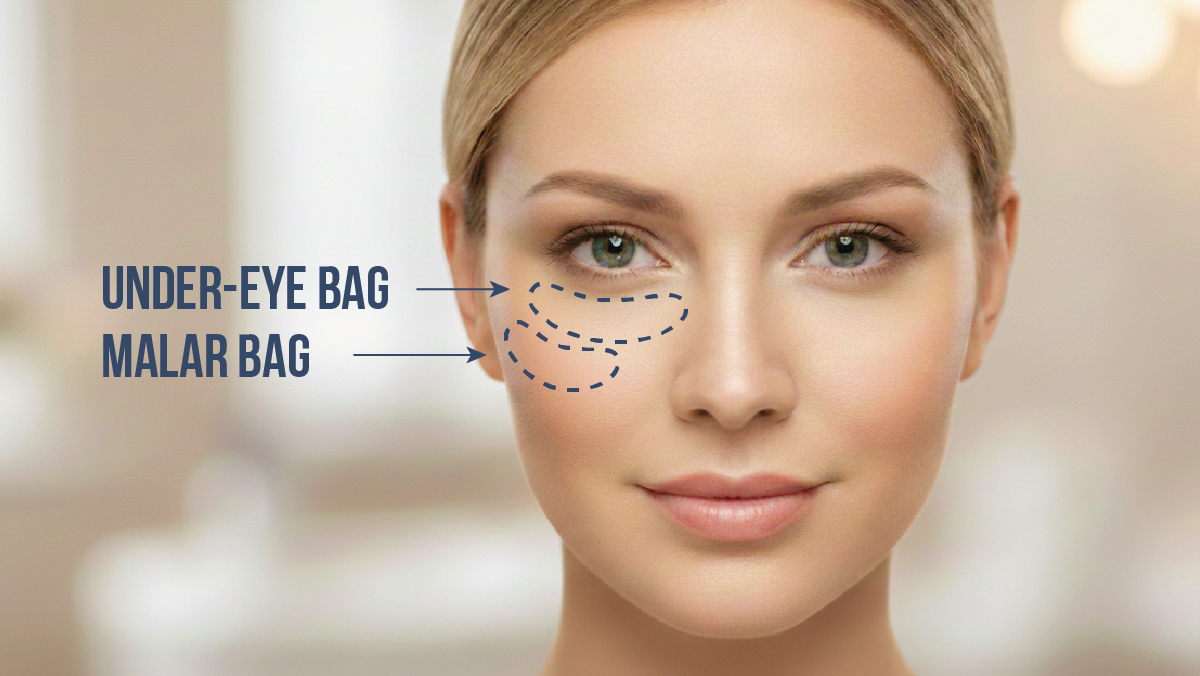
Under-eye bags usually appear directly beneath the lower eyelid, close to the lash line. They can make the eyes look tired, swollen, or older than they feel.
Under-eye bags often sit higher, right below the eye itself.
Malar bags (sometimes called malar edema or mid-cheek swelling) appear lower than under-eye bags, over the upper cheekbone area. They usually create a puffy, swollen look in the midface and can make the face look tired even when the patient is well-rested.
They are often confused with under-eye bags—but they are different in both location and behavior.
Malar bags are often related to:
Because of this, they may not respond well to “standard under-eye” approaches.
This is why a proper facial assessment matters. Treating the wrong area can lead to results that look unbalanced—or simply not effective.
One of the most common reasons patients feel disappointed with prior treatments is that the puffiness was misidentified.
For example:
At Balbas Antiaging, we start with a medical-led facial evaluation to determine:
This helps us create a more precise and natural-looking plan.
In many cases, yes—non-surgical options may help improve the appearance of puffiness, depending on the patient’s anatomy and the cause of the swelling.
The key is choosing the right strategy for the right type of puffiness.
We do not believe in overcorrecting. Our focus is on harmonious, refreshed results that still look like you.
This confusion is extremely common because both conditions can create a “tired” look. In photos or in the mirror, it may be hard to tell whether the fullness is:
A simple visual clue:
Still, the best way to know is through a consultation—especially if you’re considering treatment.
At your consultation, we evaluate:
From there, we recommend a plan that is:
This is especially important for patients who want to avoid looking overdone.
No. They are often confused, but they affect different areas. Under-eye bags sit directly beneath the lower eyelid, while malar bags appear lower over the upper cheek.
Puffiness is not always caused by sleep. Anatomy, fluid retention, and tissue changes can all contribute—especially in the malar area.
Not always. Malar bags require a careful assessment because the best approach depends on what is causing the swelling and how the surrounding tissues are behaving.
It depends on your anatomy, the type of puffiness, and the protocol recommended after evaluation. Some patients improve quickly, while others need a staged plan.
That is always the goal. At Balbas Antiaging, treatment plans are designed to improve facial harmony while preserving your natural expression.
If you’ve been calling it “under-eye bags” but your puffiness sits lower on the cheek, you may actually be dealing with malar bags—and that difference matters.
The right diagnosis leads to the right plan.
At Balbas Antiaging in Hollywood, FL, we offer personalized, medical-led evaluations to help identify the cause of facial puffiness and guide you toward the best non-surgical approach for your features.
Book a consultation and let us create a plan tailored to your face and your goals. 📲
Check our Facial Aesthetics Treatments